Crochet Terms: UK vs US
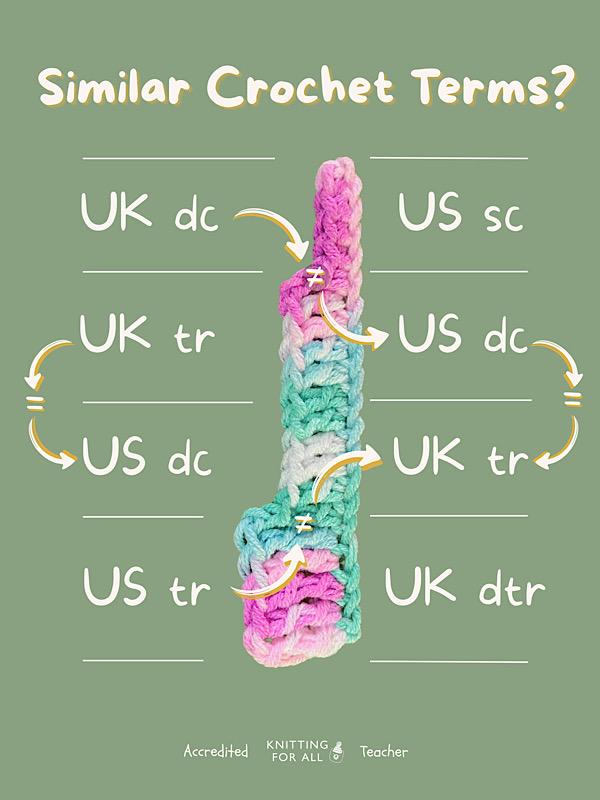
As if you don't have enough to learn when you start, now you hear there are different crochet terms. Aren't the stitches the same? The good news is the stitches are indeed the same, just called different names depending on where in the world you are, or where your pattern has been written.
Identifying which terms are being used
If you're lucky, the pattern creator will point out which crochet terms they have used. If not, there are a few ways to don your sleuthing hat and determine the likely terms.
- If your pattern uses "sc" or "single crochet", it's definitely American (in other words using US terms). This stitch name isn't used in UK terms.
- If your pattern uses "htr" or "half treble crochet", it's certainly using UK terms. This stitch name doesn't exist in US terms, they use "hdc" instead.
- Inspect the language and spelling used. Brits use "miss a stitch" and "tension", whereas Americans use "skip a stitch" and "gauge". UK patterns will use "colour", "centre", "fibre", and "recognise", while US ones will use "color", "center", "fiber", and "recognize".
- You are in luck if the pattern includes a chart, since all stitch symbols are universal.
- Dig a little deeper. If the pattern is from a book or crochet kit, check where it was published or produced. The UK, Australia, New Zealand, and most Common Wealth countries will use UK terms. Most crochet kits are produced in China and tend to use US terms.
- Find the designer on social media and work out where they are based. You could also try send them a message and ask which terms they use, assuming they are still alive.
- When all else fails, make a swatch using the stitch you assume it is and see if your swatch matches the given measurements.
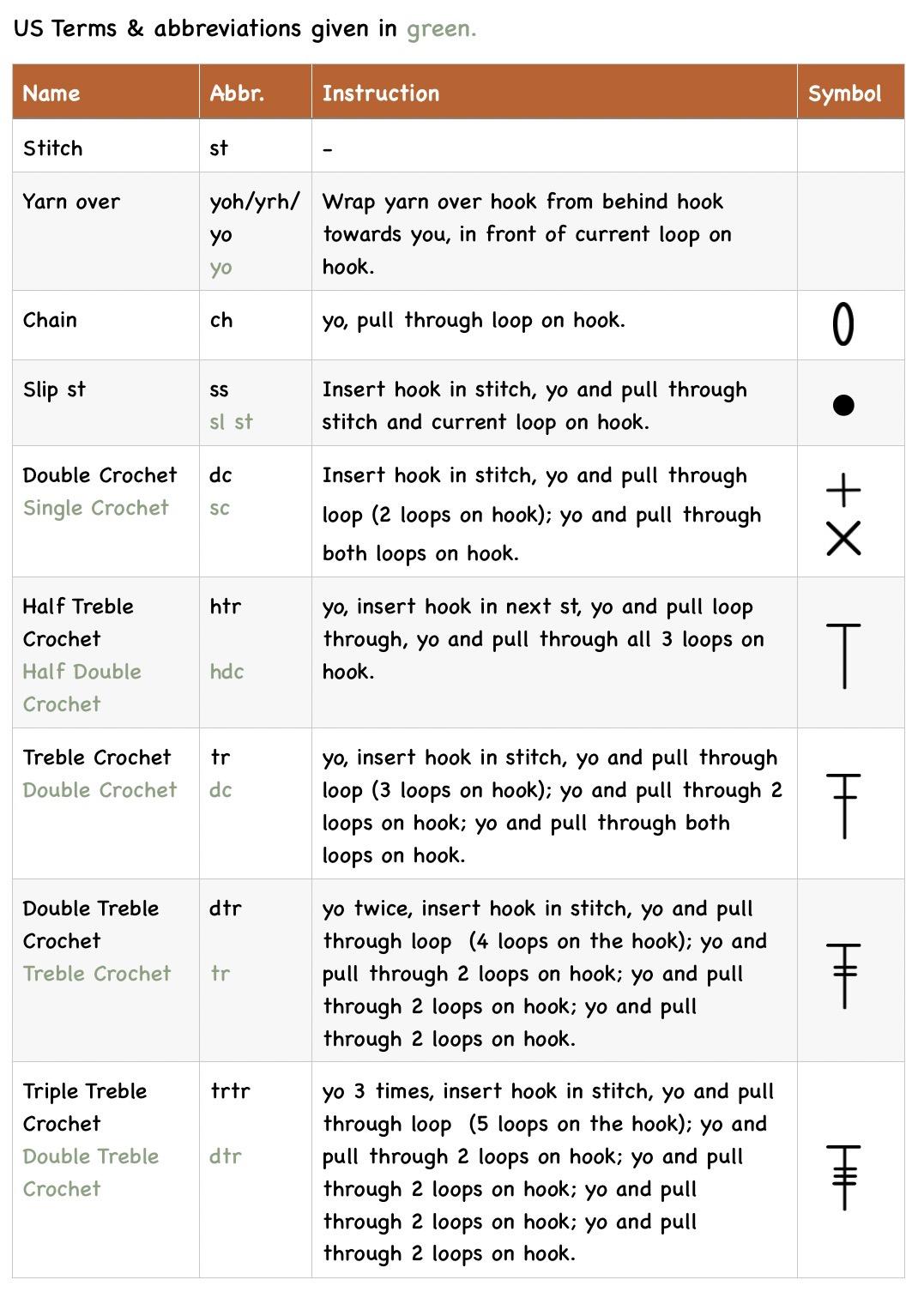
We've put together a chart to aid you in your translations.
Why does it matter which terms are used?
Imagine you're British, working on a pattern that only uses the terms "dc" and "tr", and it never occurs to you to check which crochet terms are being used. You've assumed they are UK terms. How surprised would you be when your item turns out much smaller than anticipated because the pattern was actually using US terms? If the situation was reversed and you assumed US terms, instead of UK terms, your item would turn out far too big. Nobody wants to spend hours making something, only to be disappointed in the outcome.